

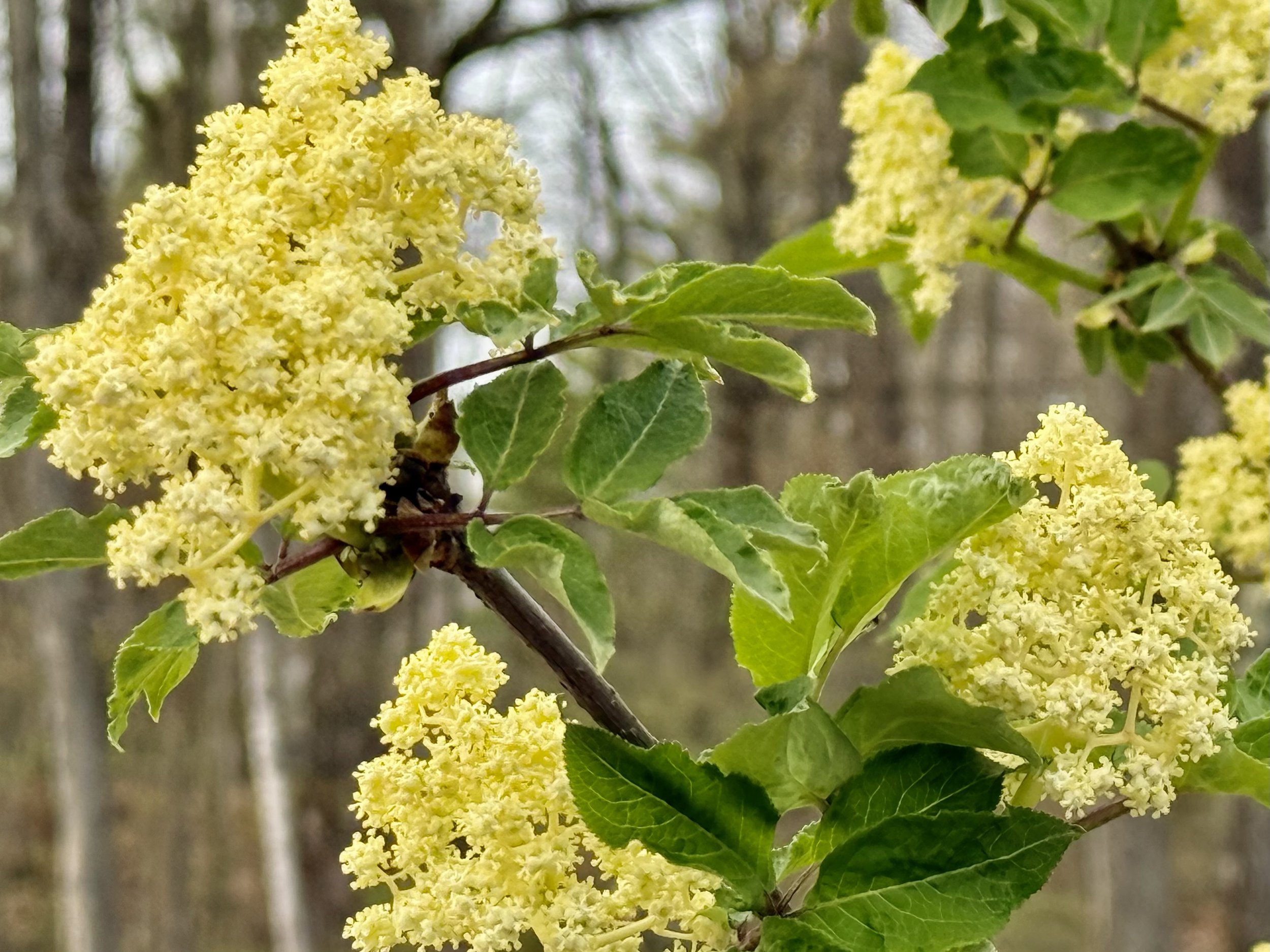
At first, the arrival of spring is subtle. Morning light comes earlier, and the evening lingers a bit longer before giving way to darkness. Birds return to familiar nesting grounds, and animals call to one another as food becomes easier to find. The last traces of snow disappear, and buds begin to take root.
These are small changes that are easy to miss if we’re moving too fast, which many of us are.
While we may be moving quickly through our busy lives, one of the ways that we begin to recognize the shift into springtime is through smell. There is the scent of damp earth after snowmelt, the sweetness of flowers beginning to bloom, and the fresh air that moves through an open window. These moments, when noticed, tell us something is changing. They offer us small invitations to pause.
This spring, we continue our exploration of Moving 10% Slower through the six senses of sound, sight, touch, smell, taste, and, in Buddhism, thoughts. Over the past few months, we have brought attention to sound, sight, and touch, each offering a direct way to slow down and arrive in the present moment.
This month, we turn toward smell, which is often less consciously attended to than the other senses.
As we have explored, vision and sound tend to stimulate and dominate our attention, while touch becomes more available when we intentionally bring awareness to the body.
Smell, while always present, often remains in the background unless something is strong or familiar. Yet, when we bring awareness to it, this sense offers a simple and immediate way to come into contact with our experience as it is unfolding. It offers us a direct path into the present moment without much effort, as it is always here. Smell is present with each breath, offering us a simple, yet powerful anchor for our attention that we can return to again and again throughout the day.
Exploring Impermanence Through Smell
The sense of smell also reveals something fundamental about how we experience each moment. Through this sense, we can begin to notice that everything is always changing.
A scent arises, lingers, and then fades. The intensity shifts. The quality changes. As we pay attention, we notice that the experience does not stay the same.
This is what the Buddha described as impermanence. Everything arises and passes, and nothing remains fixed.
Through mindful smelling, we are able to observe these changes directly. A fragrance may appear strongly at first, then soften, and then disappear altogether. Sometimes it returns in a different way. Sometimes it is just gone.
As we begin to notice how smells come and go, we begin to practice a different way of relating to our experience. Rather than holding onto what is pleasant or pushing away what is not, we learn to stay with what is here as it unfolds, ideally with curiosity and kindness rather than judgment. This shift can feel subtle at first, but over time it can change how we meet many aspects of our lives.
This is a central part of what we learn in Mindfulness-Based Cognitive Therapy (MBCT). Through awareness and practice, we begin to recognize that thoughts, emotions, and bodily sensations are not fixed or permanent, even when they feel intense or convincing. They arise, change, and pass, much like a scent.
By observing change directly through something as simple as mindful smelling, we may begin to develop a more flexible and responsive way of meeting our experience. There can be a little more space around what we are noticing, and less urgency to react.
The Mind’s Relationship to Scent
As we pay attention to smell, we may also notice how quickly the mind becomes involved.
A scent can bring up a memory, a preference, or a reaction almost instantly. You might notice liking or disliking what you smell, or find yourself remembering a place, a person, or a moment from the past.
This is because the brain processes scent in a way that is closely tied to emotion and memory. Unlike the other senses, olfactory information travels directly to regions within the limbic system, including areas involved in emotional processing and memory. As a result, smells can evoke memories and emotional responses quickly, often before conscious thought has time to interpret the experience.
With mindfulness and MBCT, the practice is not to get rid of these responses, but to notice them. You might become aware that a scent is present, and then notice that the mind has moved into memory or judgment. From there, you can gently return to the direct experience of smelling.
Over time, noticing these patterns helps us relate differently to our thoughts and reactions. Even when something arises quickly or strongly, we begin to see it as part of the flow of experience, rather than something we need to cling to or push away. This can create a greater sense of freedom in how we respond.
Coming Back Through the Breath
Because smell is closely connected to breathing, it can also support us in coming back into the body.
You might notice the scent of the air as you inhale. There may be very little to detect, or there may be something more distinct. Either way, the act of noticing can help anchor attention.
Mindful smelling does not require changing the breath. It is simply a way of allowing awareness to include the subtle experience of scent as the breath moves in and out.
In this way, smell becomes both an anchor and a doorway into presence. It is something simple that can be surprisingly supportive.
Returning to What Is Already Here For Grounding and Support
As we move through spring, you might begin to use your sense of smell as a simple way to support and ground yourself during the day. This does not require doing anything special. It might be as simple as taking a moment to notice the scent of the air when you step outside, the smell of your hands after washing them, or the subtle fragrance of something blooming nearby.
When you notice a scent, pause and bring your full attention to it. You might also feel the breath as it moves in and out, noticing the scent as it arrives and changes. If the mind moves into thought, memory, or reaction, gently acknowledge it and return to the direct experience of smelling.
Smell can also be a powerful support for grounding and shifting your mood. You might begin to notice which scents feel calming, uplifting, or comforting to you, and which ones you tend to move away from. Working with scent in this way can become part of your own care and awareness throughout the day.
Some people also find it helpful to bring in scent intentionally through essential oils, herbs, or incense. These can be used to create a sense of steadiness, support relaxation, or simply mark a moment of pause. Smells are often associated with particular environments and states of mind (think of incense used in temples or oils used in a spa), and they can gently support the nervous system in settling.
You might also play with how scent can evoke positive memories and support a more settled or uplifted mood. Perhaps you bake cookies that remind you of your grandmother, or notice a familiar scent that brings you back to a place or moment where you felt safe or at ease. These moments can gently bring forward feelings of warmth, connection, and comfort, helping you feel more grounded in the present moment.
I invite you to explore mindful smelling this season. Let it be a simple way to come back, reconnect with your surroundings, and support a more steady and responsive way of meeting whatever is here.
Wishing you a gentle and grounded spring.
Much love,
Karen
Stay Connected
If you haven’t already, I invite you to sign up for the free, monthly newsletter, Grow Your Inner Wisdom—in the midst of it all… , which offers an anchor to help each of us deepen and strengthen our mindfulness and meditation practices. In each newsletter, you’ll receive a little note from me discussing a different theme each month, a link to my most current blog post, and practice to help you feel into and connect with the theme of the month. Please join us, and sign up for the newsletter on my website.
Monthly MBCT & Mindfulness Meditation Group
You’re warmly invited to join our monthly MBCT & Mindfulness Meditation Group, meeting online on the second Tuesday of every month from 6:30–7:45 pm EST (Zoom).
Each session includes a short dharma talk, a guided meditation, and time for reflection on a mindfulness theme relevant to everyday life. Together, we practice settling into the breath and body, gently returning attention to the present moment.
This group is open to those who have completed the 8-Week MBCT Course, as well as anyone interested in deepening their mindfulness practice. It can be especially supportive for those navigating stress, worry, or low mood, and for anyone seeking ongoing practice and community. More info is available on the Mindfulness Meditations Sessions page on the website.
About Mindfulness-Based Cognitive Therapy (MBCT)
Mindfulness-Based Cognitive Therapy (MBCT) is an evidence-based approach that supports people navigating stress, anxiety, low mood, and depression by helping them develop a different relationship with thoughts, emotions, and body sensations. Rather than trying to fix or eliminate difficulty, MBCT offers practical tools for meeting experience with greater awareness, steadiness, and choice.
To learn more about MBCT and upcoming offerings, visit the MBCT Course page on this website. If you have questions or would like to explore whether MBCT might be a good fit for you, you’re also welcome to contact me directly at karen@drkarenwalant.com.